Community Housing

Community Housing
Port Townsend and Jefferson County face a housing challenge shaped by the very qualities that make this place special: breathtaking landscapes, a strong sense of community, and a small-town character that draws people from near and far. But that appeal has collided with a limited housing supply, rising home prices, and a shrinking local workforce. Jefferson County is now among the least affordable counties in Washington, while the working-age population has declined even as the overall population has grown. For local teachers, nurses, maritime workers, artists, tradespeople, families, and young people trying to put down roots, finding a home they can afford has become increasingly difficult. The result is more than a housing problem—it touches the vitality of our businesses, schools, services, and community life.
For the City of Port Townsend, addressing this challenge is about ensuring that the community can remain a place where people from all walks of life can build a life, contribute their talents, and put down roots. It means creating opportunities for thoughtful growth while protecting the natural beauty, sense of place, and strong community connections that make Port Townsend unique. Through projects like Evans Vista, the City is working to make room for the people who keep Port Townsend thriving—and to ensure that the next chapter of our community is as welcoming, creative, and distinctly Port Townsend as the one that came before it.
The City’s Direct Role in Housing
The City’s role in housing is bigger than building homes—it is about creating the conditions for homes to happen. Port Townsend uses its policies, land, infrastructure, funding, and partnerships to make affordable housing more possible: reducing development barriers, offering fee waivers and tax incentives, allowing greater housing variety and density, investing in infrastructure, pursuing grants, and prioritizing City-owned land for housing. The City has also taken the unusual step of becoming a direct catalyst for development by acquiring the Evans Vista property and investing in the infrastructure and planning needed to support a future affordable and workforce housing neighborhood. While the City is not itself a traditional housing developer, it can use its public resources to unlock opportunities that the private market alone cannot deliver—helping create a Port Townsend where teachers, tradespeople, families, seniors, artists, and essential workers can afford to live and put down roots.
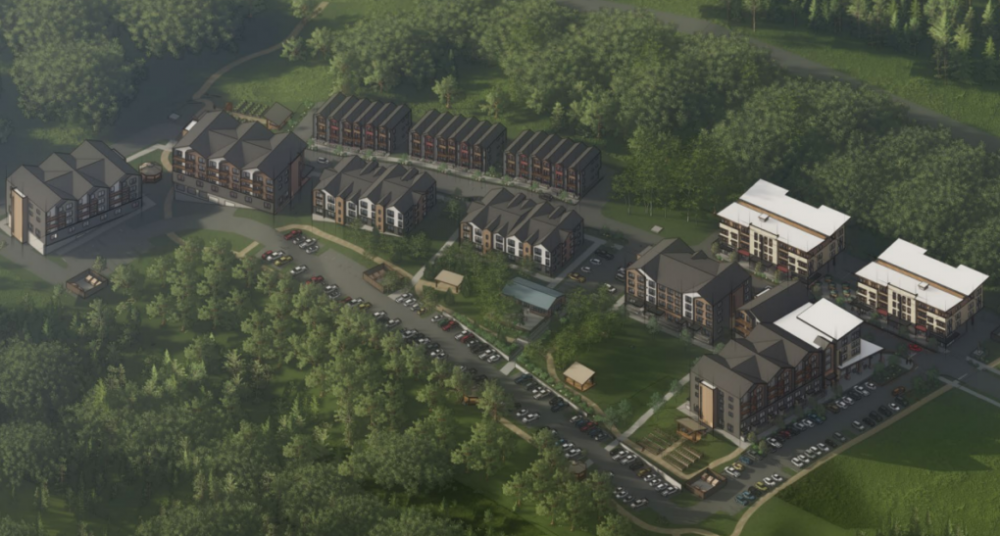
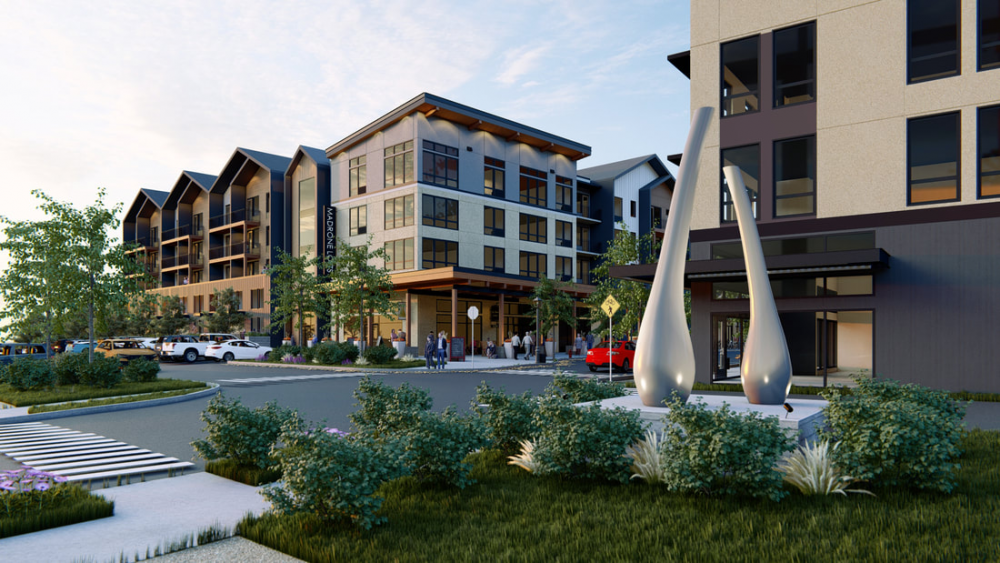
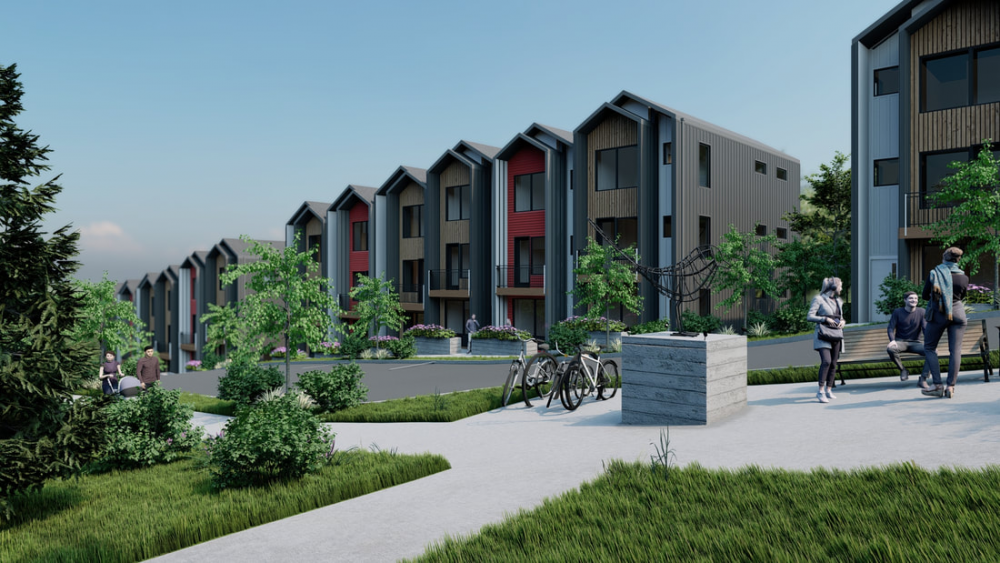
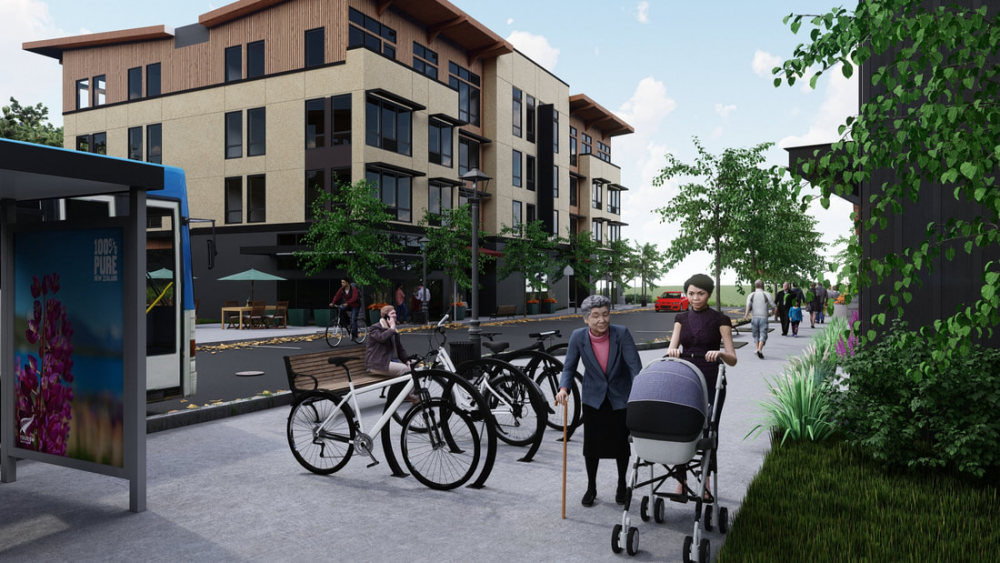
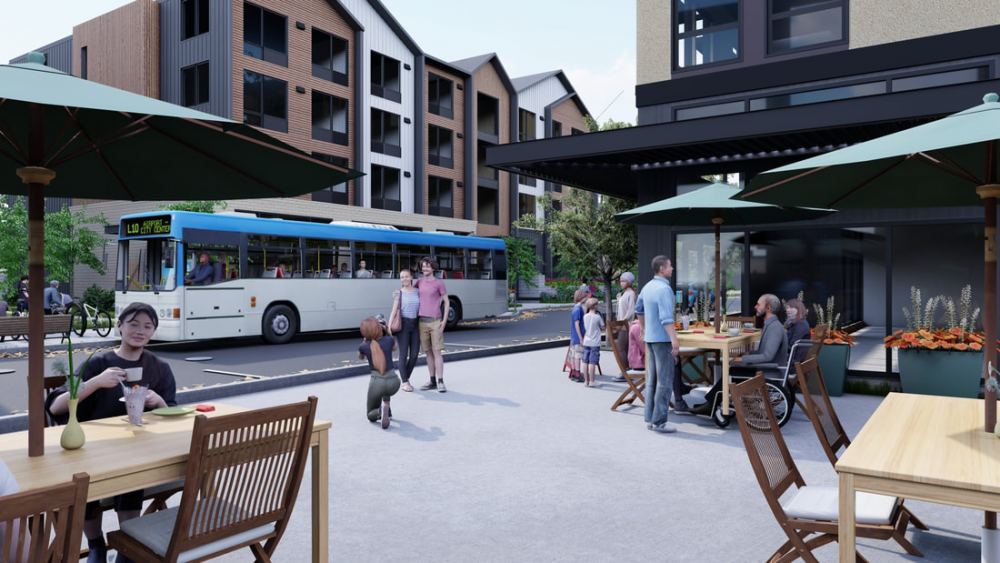
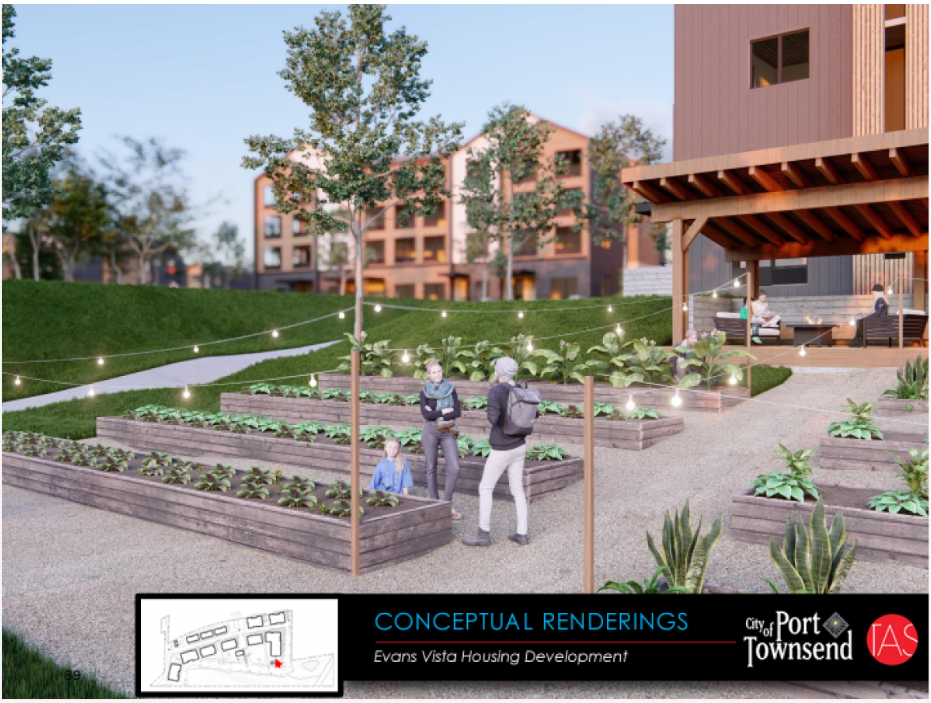
At the edge of town, where the forest meets Sims Way and Port Townsend begins to unfold, a new neighborhood is taking shape. Evans Vista is an opportunity to do something special: create homes for the people who make this community what it is while honoring the character, creativity, and natural beauty that make Port Townsend home. Envisioned as a walkable, mixed-income neighborhood with approximately 321 homes, Evans Vista will offer a range of housing for local workers, families, seniors, and neighbors at different stages of life. Homes will be woven together with open space, trails, community gathering places, gardens, and opportunities for art and connection. Forested areas and ecological corridors will remain part of the landscape, while connections to transit, schools, jobs, and the Larry Scott Trail will make it easier to live locally and stay connected. Most importantly, Evans Vista is an opportunity to grow without losing our sense of place—to build something new that still feels unmistakably Port Townsend: creative, welcoming, a little unconventional, and deeply rooted in community.
The Evans Vista project is envisioned as more than a housing development—it is an opportunity to create a new, connected neighborhood that reflects Port Townsend’s values and strengthens the community for generations to come. The project aims to provide long-lasting affordable and workforce housing, offer a diverse mix of homes for households of different sizes and incomes, and create a welcoming neighborhood where people can live, work, and play. The vision includes community-serving amenities such as childcare, family services, retail, and gathering spaces, while connecting Evans Vista to the Larry Scott Trail, active transportation, transit, and the emerging Rainier Subarea business district. By using public investment in land and infrastructure to make housing more attainable, the City hopes to create a lasting public asset that supports local workers and families, strengthens Port Townsend’s economy and resilience, and demonstrates how thoughtful growth can complement—not compromise—the community’s distinctive character.
City of Port Townsend 3-Year Strategic Plan
Port Townsend’s affordable housing strategy starts with a simple idea: a thriving community needs room for all kinds of people to call it home. The City’s 2019–2022 Strategic Plan lays out five strategies for getting there. First, the City committed to clarifying its role in housing and recognizing that there is no one-size-fits-all solution—the needs of local workers, seniors, low-income households, and people experiencing homelessness are different and require different approaches. Second, it called for universal access to information infrastructure, helping ensure residents can connect to the information and resources they need. Third, the City committed to exploring multiple ways to fund affordable housing and working more closely with partners, recognizing that meaningful progress takes collaboration and resources beyond City Hall. Fourth, the plan looked to publicly owned land—including property held by the City, Port, County, and other agencies—as a potential part of the housing solution. And fifth, it called for regulatory reform, examining the rules that shape what kinds of homes can be built and where. Together, these strategies envision Port Townsend doing what it does best: bringing people, ideas, and resources together to find creative, locally grounded ways to keep our community livable for the people who make it the place we love.
What does housing have to do with Port Townsend’s financial future? Quite a lot. This video explores how our housing shortage affects not only the people searching for a home they can afford and a foothold in the community, but the health and vitality of the entire community. With limited options for renters, first-time buyers, people looking to downsize, and the local workforce, Port Townsend is looking at ways to welcome more housing while holding onto the character that makes this place special. That includes encouraging “missing middle” homes—like townhomes, apartments, and ADUs—partnering on projects such as Evans Vista, and tackling the high cost of extending streets, water, and sewer to new homes. The video also explores creative ways to pay for that infrastructure and make affordable housing more achievable. At its heart, it asks an important question for Port Townsend’s future: How do we make sure the people who work here, raise families here, and contribute to our community can also afford to live here?
Tactical Infill Housing: Building Residential Capacity
The 2023 White Paper takes a closer look at one of Port Townsend’s toughest housing puzzles: we have land where more homes could go, but getting streets, water, sewer, and other infrastructure to those homes can make development prohibitively expensive. Port Townsend’s historic pattern of low-density development and incomplete infrastructure has left the community with high costs that can stand in the way of building housing that local workers and residents can afford. The paper argues that addressing housing and infrastructure together is essential—not only for affordability, but for the City’s long-term financial and environmental sustainability.
Rather than proposing a single solution, the White Paper explores a toolbox for making better use of the neighborhoods and infrastructure we already have. That includes encouraging infill and greater housing diversity, expanding incentives such as the Multifamily Tax Exemption, creating funds to help with infrastructure and development costs, planning strategically for where infrastructure should be extended, and reforming zoning to support more efficient use of land. Ultimately, the paper makes the case that Port Townsend will need a thoughtful combination of policy, zoning, infrastructure investment, partnerships, and financial tools to create more attainable housing while sharing the costs of growth fairly.
The City of Port Townsend’s Tiny Houses on Wheels (THOW) program is one of several strategies intended to expand the range of housing choices available in the community. Beginning July 1, 2023, the City began allowing qualifying THOWs as Accessory Dwelling Units (ADUs) and also created a pathway for THOW communities of four to twelve units. On a lot with an existing single-family residence, up to two qualifying THOWs may be permitted as ADUs.
THOWs are small, self-contained homes of no more than 400 square feet, excluding loft space. They must meet specific City requirements and Washington Department of Labor & Industries certification standards, along with additional standards intended to make them appropriate for year-round residential use. By allowing this housing type, the City has opened another avenue for creating smaller, potentially lower-cost homes while adding housing within existing neighborhoods. The City describes the THOW regulations as part of its broader Tactical Housing/Infill work to increase housing flexibility and affordability.
The THOW program adds another tool to the City's housing toolbox. It creates opportunities for modest-scale infill, gives property owners another way to add a home, and broadens the types and sizes of housing that can exist in Port Townsend. It will not meet the community's affordable housing needs by itself, but alongside larger affordable housing projects, ADUs, multifamily and middle housing, infrastructure investments, incentives, and partnerships, it can contribute to the broader goal of creating more diverse and attainable housing choices for people who live and work in the community.
Affordable Housing & Homeless Housing Joint Oversight Board
Housing is a regional challenge, and Port Townsend and Jefferson County have a long history of working together to address it. In 2018, the City and County established the Affordable Housing & Homeless Housing Joint Oversight Board and a Housing Task Force to coordinate local housing efforts, oversee funding, and develop a five-year plan addressing short- and long-term housing needs. In 2021, that partnership evolved with the creation of the Joint City/County Housing Fund Board, which replaced the Joint Oversight Board and provides a coordinated structure for investing local resources in affordable and homeless housing programs.
A key tool supporting this work is the local 0.1% sales and use tax for housing and related services, authorized under state law and effective in Jefferson County beginning in 2021. Revenue from this dedicated funding source can be used for affordable housing, emergency housing, and related housing services, giving the community an ongoing local resource to help turn housing priorities into action. Together, the Housing Fund Board, Housing Task Force, dedicated funding, and partnerships with local housing providers create an important regional framework for leveraging local dollars and community expertise creating safe, stable, and affordable places to call home.
The 2025-2030 Jefferson County Homeless & Affordable Housing Services Plan addresses homelessness and affordable housing in Jefferson County through community engagement, identifying causes like insecurity and systemic barriers, and emphasizing the need for stable, tailored housing solutions. It highlights the importance of a skilled workforce, transparent accountability, and coordinated efforts among agencies, with focus on vulnerable populations and systemic barriers to equitable housing access.
City/County Pre-approved Stock Plan Program
The City of Port Townsend and Jefferson County are pausing work on the joint Stock Plan Program so the effort can be strengthened before moving forward. This pause is not an end to the program. Instead, it gives the City, County, and community partners more time to design a clear, coordinated, and practical approach that can better serve residents, builders, and housing organizations across our region. Taking this extra time will also allow staff to look for grant funding and other resources that could help support a more successful program, including a broader catalog of plans, stronger technical review, and a more useful path for people who want to build smaller, well-designed homes.
Partnerships: It Takes a Community
No single organization can solve our housing and homelessness challenges alone. Port Townsend and Jefferson County benefit from a strong network of nonprofit and community partners, each contributing a different piece of the housing puzzle. Bayside Housing & Services provides shelter, supportive housing, and services that help people move toward stability; Dove House Advocacy Services provides emergency and transitional housing and trauma-informed services for survivors of domestic violence and other crimes; and OlyCAP Services Office operates emergency, transitional, and permanent supportive housing while providing rental assistance, homelessness prevention, and other supportive services. OWL360 helps young people build pathways to stable housing and independence, while Community Build mobilizes volunteers to construct tiny shelters and pursue other small-scale housing solutions.
Other partners focus on creating and preserving permanent affordable housing. Habitat for Humanity of East Jefferson County creates affordable homeownership opportunities; Olympic Housing Trust uses the community land trust model to preserve affordability over the long term; and the Peninsula Housing Authority provides affordable rental housing and rental assistance. Housing Solutions Network connects and mobilizes community partners, advocates for housing solutions, and helps build public understanding and engagement. Organizations such as Jefferson Interfaith Action Coalition, Reach Out, and Real Estate Professionals for Affordable Housing (REPAH) contribute another critical layer through warming services, basic-needs assistance, outreach, advocacy, and help keeping existing homeowners safely housed.
Together, these organizations form a housing continuum—from preventing someone from losing their home, to providing a safe place during a crisis, to transitional and supportive housing, affordable rentals, and homeownership. The City’s role is strengthened when it works alongside this network, pairing public resources—land, funding, infrastructure, policy, and partnerships—with the experience and capacity of organizations doing this work every day. Strong partnerships help turn limited resources into more housing opportunities and, ultimately opening the door to more housing opportunities for our community
The Cherry Street property has been connected to Port Townsend’s affordable housing goals for more than 15 years. The City identified the site for affordable housing in 2009, and in 2017 partnered with Homeward Bound Community Land Trust on a plan to relocate and rehabilitate the Carmel apartment building from Victoria, B.C. When that approach ultimately proved financially infeasible, the building was removed and the property declared surplus in 2023. Today, the focus is on the opportunity ahead: putting this publicly owned land to work creating much-needed housing for the community.
Cherry Street is also part of a bigger picture. The City maintains an inventory of surplus and publicly owned properties, some of which may offer opportunities for future housing. While not every parcel is suitable for development, City-owned land is an invaluable tool in Port Townsend’s housing toolbox—it can reduce land costs, support partnerships with housing providers, and help make affordable projects possible. Properties like Cherry Street give the community an opportunity to turn public assets into public benefit: increasing housing supply and, most importantly, helping ensure everyone in our community has a place where they can live and thrive.
COVID Recovery and Resilience and Economic Development Framework
As part of the 4-agency Intergovernmental Collaborative Group (ICG), the City helped develop a community-driven COVID Recovery and Resilience Action Plan in 2020. Actions from that plan are in various stages of complete, underway, and being planned. In 2021, the ICG subsequently focused on the development of an Economic Development Framework to help define our vision and collaborative work ahead; this included housing as a critical component to unlock lasting economic opportunity and well-being for us all. In 2022, with a range of federal funding opportunities, the ICG is focused on capital facilities and major projects of regional significance to ensure coordination and maximum benefit to our region. Some of these projects, directly and indirectly, involve affordable and workforce housing as a critical component.